10. Camp Nou [SEE MAP] Camp Nouflickr/Oh-Barcelona. com.
One for the sports fans, yet still among Barcelona's most popular tourist attractions. This arena is home to formidable European football champs F.C. Barcelona.
With a capability of 99,000 individuals, this awesome sporting arena is Europe's https://ameblo.jp/titusetyy142/entry-12724437186.html biggest. A tour of the ground is absolutely worthwhile and you never ever know, you might be lucky adequate to capture a video game!
9. Montjuïc [SEE MAP] Montjuïcflickr/ Photo Kamil.
Montjuïc is a broad shallow hill with a relatively flat top to the southwest of the city. The eastern side of the hill is practically a sheer cliff, offering it a commanding view over the city's harbor right away below. The top of the hill was the site of a number of strongholds, the current of which stays today.
Another interesting sight is the Palau Nacional (National Palace), originally constructed as the central structure for the International Exhibit. The magnificent structure in neo-Baroque style is house to the Museu Nacional d'Art de Catalunya (MNAC). Montjuïc is also house to a number of sports facilities constructed for the 1992 Olympics.
8. Casa Milà [SEE MAP] Casa Milàflickr/ Rob Shenk.
Built between the years 1906 and 1910, Casa Milà (La Pedrera) was the last civil work created by Catalan architect Antoni Gaudi. The vibrant building is thought about among the artist's most eccentric and attracting architectural productions with not one straight edge on the outside.
Tours of the interior and the extraordinary roofing system structures are available. It likewise hosts a large exposition of Gaudi works, covering Sagrada Familia and Casa Batlio, not only La Pedrera itself.
7. Gothic Quarter [SEE MAP] Gothic Quarterdreamstime/ © 88and84.
Old is excellent, particularly when it's the Gothic Quarter, located in the earliest part of Old Town Barcelona. Some state the quarter goes back 2,000 years, however what tourists will see today isn't that old: a labyrinth of narrow streets flanked by buildings from middle ages times to the 19th century.
Tourists will see the Jewish Quarter, considered the Gothic Quarter's most beautiful area; stroll the courses where a young Picasso went to school; eat at Can Culleretes, the earliest dining establishment in Barcelona, dating to 1796, and shop at the colorful Boqueria market.
6. Barceloneta [SEE MAP] Barceloneta.
Out of Barcelona's seven various beaches, stretching over 4.5 km (2.8 miles) of coastline, Barceloneta probably tops them all. It is among the most popular and is closest to the town hall. Along the 1,100 meter (3,600 feet) sandy beach runs a pathway popular with joggers and bicyclist.
Not surprisingly this location can get crowded, particularly throughout the summertime when the beach bars open and the beach quickly fills up with locals and traveler.
5. Font Màgica [SEE MAP] Font style Màgicaflickr/ jeroen_bennink.
Font Màgica is a water fountain located below the Palau Nacional on the Montjuïc hill and near the Plaça d'Espanya and Poble Espanyol de Barcelona. The fountain, like the majority of the surrounding advancements, was built for the 1929 Barcelona International Exposition.
On selected evenings, when the fountain is activated, it attracts numerous visitors who view the spectacular screen of light, water and music. At the same time, the Palau National is illuminated, supplying a lovely background.
4. Casa Batllo [SEE MAP] Casa Batlloflickr/marimbajlamesa.
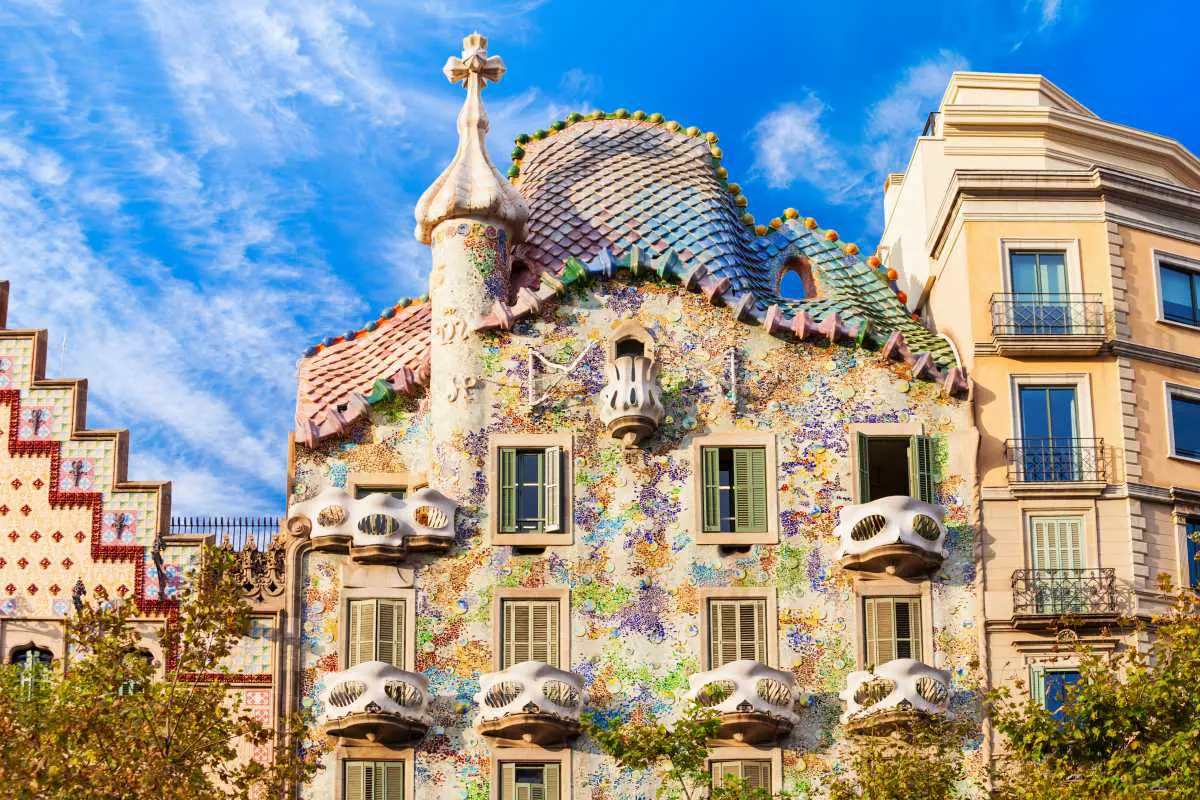
It's tough to find the words to explain Casa Batllo, perhaps because it looks like a carnival gone crazy. Among designer Antoni Gaudi's most popular buildings, Casa Batllo is a mish-mash of colors, building products and what-have-you styles.
There's a large onion-like dome that's reminiscent of a mosque; a vibrant wavy tiled roofing system line and great deals of sculptures. Gaudi turned a 19th century structure into Casa Batllo, in some cases called the "home of bones" because of the many jaws on one sculpture. It was a home without equal, but not one most people would feel comfortable living in.
3. Parc Guëll [SEE MAP] Parc Guëll.
With other major works in the city consisting of La Casa Batlló and La Pedrera, this has to be among Antoni Gaudí's most well known and it is certainly among the most emblematic of Barcelona.
The location was originally meant to be a domestic property advancement with Gaudi doing much of the planning and landscape style. It is house to the famous Salamander sculpture, as well as other structures and structures developed by the designer.
2. La Rambla [SEE MAP] La Rambla.
This is probably the city's most famous street and is a dynamic hive of activity. It is typically called Las Ramblas, since it is actually a series of a number of various streets that all have an unique feel.
Located just off Plaza Catalunya and leading right down towards the port and beach, visitors will discover street entertainers, lots of bars and restaurants and the incredible Boquería Market, a real feast for the eyes.
1. Sagrada Familia [SEE MAP] # 1 of Traveler Attractions In Barcelona.
La Sagrada Familia is the most popular attractions in Barcelona, drawing in almost 2.8 million visitors each year. The structure is anticipated to be completed within the next 30 years.
Work on La Sagrada Familia started in March of 1882 by Francisco de Pala del Villar, the diocesan architect. Gaudi was commissioned to take control of the work at completion of 1883. He continued with the creating and structure of this distinct project till his death on June 7, 1926 at the age of 74.
Following his death, a series of skilled architects continued the construction according to Gaudi's strategies. Throughout the Spanish Civil War in 1936, a fire destroyed many of these plans. Attempting to follow the remains of the original styles has actually been a challenge for present-day architects dealing with the structure.
The style of La Sagrada Familia integrates analyses of lots of architectural styles, such as Arat Nouveau, Gothic and Catalan Modernism. Gaudi's initial strategies required a temple big enough to seat 13,000 individuals. Since he disliked straight lines, his towers were influenced by the peaks of Montserrat Mountain outside Barcelona, and had similar unequal lines.
Anyone thinking about architecture will discover this building remarkable to study. The plans consist of 18 spires, which represent Jesus Christ, the Virgin Mary, the four Evangelists and the Twelve Apostles. Work is still occurring on a few of these spires, while others are open to the general public.
The style also requires three facades on the structure. These consist of the Nativity Exterior dealing with east, the Passion Exterior dealing with west and the Glory Façade facing south. The Nativity Facade was completed in 1930. The Passion Façade and the Magnificence Façade are still under construction.
Visitors will be captivated by the elaborate design components and the spiritual meaning constructed into all the areas of the church. The finished area of the church is open to all who wish to view it, as are the finished towers. In addition, a little museum exists within the structure where one can discover scale designs and illustrations revealing the plans for the building and construction of the structure.
La Sagrada Familia has actually been providing worship chances given that the fall of 2010 for those who may want to participate. Furthermore, Pope Benedict XVI consecrated the church and declared it a basilica in November 2010 throughout his check out there.
In his strategies, Gaudi knew that his work of art would not be completed during his life time. He planned for it to be built in parts, therefore assuring that each generation may be able to focus on among the areas. This beautiful basilica is nearly ended up, and when it is, Gaudi's vision will finally be fulfilled.